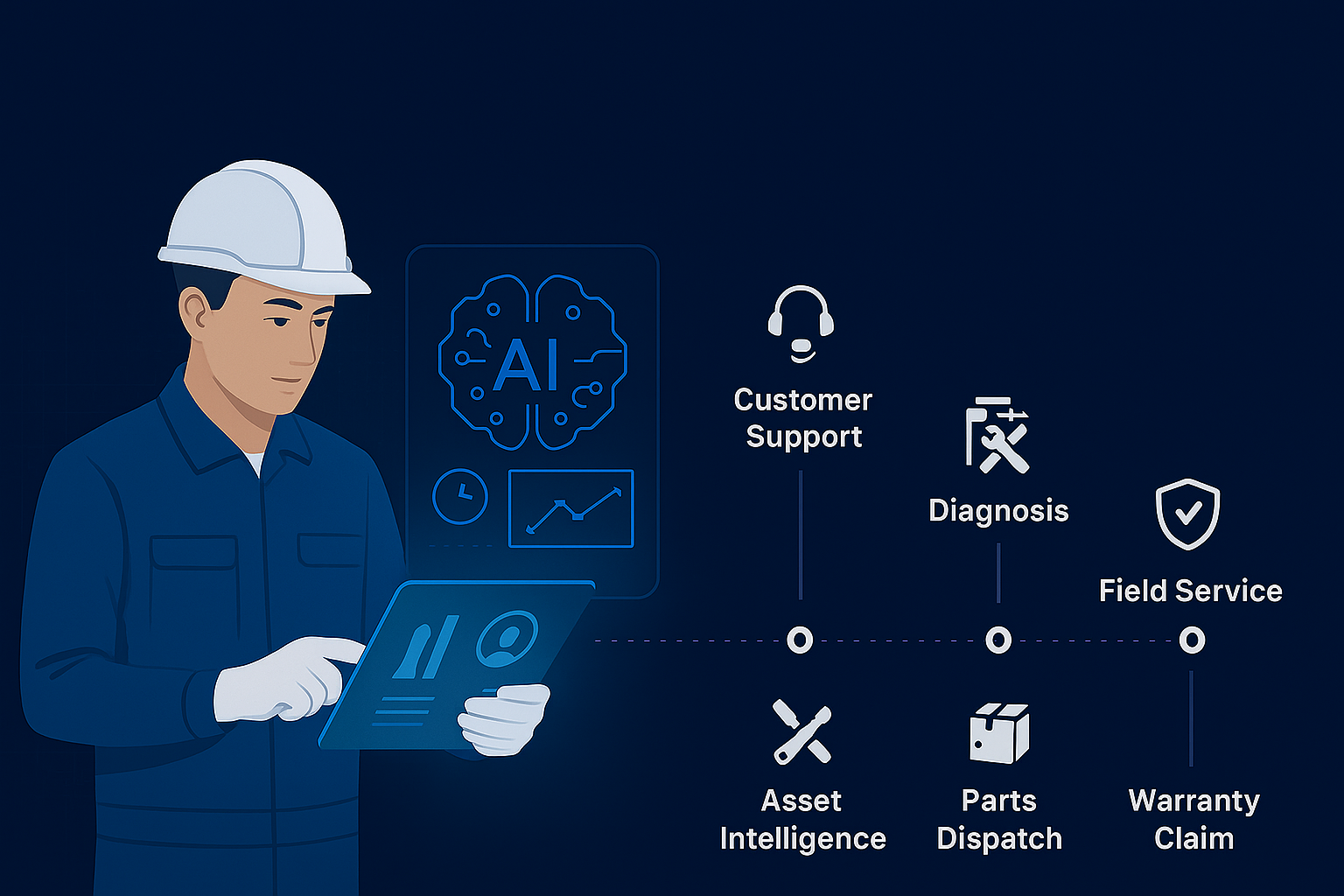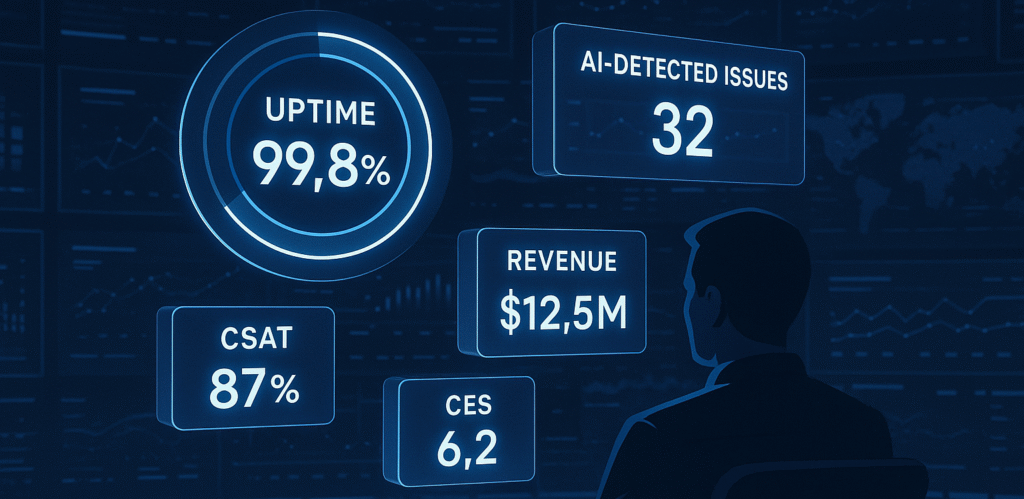

Field service teams in 2025 are under pressure to deliver more with less, while driving revenue growth, boosting uptime, and delighting customers. However, many organizations stumble by making strategic missteps. Here are the top five field service transformation pitfalls that undermine service impact, and practical tactics to turn them around.
As we discussed in our State of Field Service 2025 report, the field service landscape is undergoing rapid transformation. In 2025, field service organizations are investing heavily in AI, self-service, and predictive maintenance. Yet many still struggle to realize ROI, unlock revenue, or deliver a differentiated customer experience. Why? Because beneath the hype, common transformation mistakes quietly erode performance.
In my own work with industrial manufacturers, I’ve seen firsthand how promising initiatives stall, not because the technology is flawed, but because of misalignment between strategy, process, and execution.
Let’s explore common field service strategy mistakes, and what you can do differently.
#1: Treating Field Service as a Cost Center
Many businesses still treat field service as an operational expense, measuring success by cost reduction alone. But in 2025, service plays a pivotal role in growth, brand differentiation, and recurring revenue. Viewing service through a narrow cost lens results in underinvestment and missed opportunities
Business Impact
- Limits Service Led Growth Opportunity
- KPIs like service revenue, customer retention, and contract renewals stay flat or decline.
- KPIs like service revenue, customer retention, and contract renewals stay flat or decline.
- Undermines business resilience during downturns.
What to do Instead
- Treat Service as a Value-generation function.
- Link service KPIs to revenue, retention, and CX.
- Report on service-led upsell and renewal opportunities.
- Empower techs to support revenue goals in the field.
#2: Ignoring End-to-End Service Design
Digital transformation efforts often zero in on dispatch, work order management, or automation in silos. But real transformation comes from designing the entire service journey, from the moment a problem is reported to resolution, feedback, and renewal. Failing to take a design-led approach results in fragmented, frustrating customer experiences.
Business Impact
- Disconnected systems lead to longer resolution times and poor first-time fix rates.
- Service NPS drops due to inconsistent experience.
- Siloed tools lead to unclear handoffs, inconsistent service performance, and missed cross-sell or upsell opportunities.
What to do Instead
- Map out the full customer and technician journey.
- Identify handoffs, gaps, and bottlenecks.
- Align service ops, support, and product teams on key touchpoints.
- Use journey maps as the foundation for technology investments.
#3: Building in Silos Across Sales, Service, and Product
When service data, product insights, and customer needs sit in separate systems, teams lose visibility and customers lose patience. Siloed operations create repetitive work, contradictory information, and no shared understanding of customer issues.
Business Impact
- Delays in problem resolution due to lack of access to full context .
- Inability to feed real-world service data back to product development.
- Weak upsell potential and disconnected customer experience.
What to do Instead
- Build a shared service-data layer accessible across departments.
- Connect service CRM, product feedback loops, and sales insights.
- Involve field teams in product improvement processes.
- Implement service-led closed-loop feedback systems.
4: Underinvesting in Workforce Resilience and Skills
Field service teams are facing higher complexity, advanced assets, digital tools, remote diagnostics, and heightened customer expectations. Yet many companies fail to upskill and support technicians accordingly. Service talent is not just about efficiency, it’s about adaptability, empathy, and technical depth.
Business Impact
- Slower ramp-up time for new tech and processes.
- Increased burnout and attrition in frontline teams.
- Reduced productivity as tech turnover erodes service quality
What to do Instead
- Build learning journeys for new technologies, soft skills, and CX.
- Provide mobile, just-in-time learning content.
- Recognize and reward service innovation and collaboration
5: Chasing AI Without Foundational Readiness
AI holds immense potential, from predictive service to virtual assistants. But without clean data, clear use cases, and change management, AI becomes noise, not impact. Many organizations jump into pilots without aligning AI to real service needs or investing in foundational readiness.
Business Impact
- AI pilots stall due to poor adoption and untrustworthy data.
- Technician frustration increases with non-actionable AI insights.
- AI tools fail to scale, data silos persist, and leadership loses confidence in digital investments.
What to do Instead
- Clean and structure service data before applying AI.
- Start with high-value, low-complexity use cases (e.g., predictive parts planning).
- Build trust and usability into AI interfaces for field teams.
- Pair AI efforts with strong change management plans.
Final Thoughts
These mistakes form a powerful framework for any field service leader aiming to transform operations in 2025. Each misstep touches cost, revenue, or customer satisfaction, and each can be resolved with strategic alignment and planning. Avoid these traps, and you’ll steer field service toward being a true profit centre, not just a support function.
Want a deeper look at where field service is headed? Read a breakdown of 2025’s top trends