Service organizations are entering a decade of profound transformation. As products become smarter, customer expectations rise, and disruptive technologies accelerate, the future of service will no longer be defined by break-fix support.
By 2030, service will stand as a strategic growth engine – delivering measurable customer outcomes, enabling new revenue streams, and driving resilience in a volatile global landscape. This is the tipping point where technology, customer expectations, and global forces converge, redefining what leadership in service truly means.
The New Reality: Macro Forces Shaping Service
By 2030, the service landscape will not just evolve – it will be reshaped by converging macro forces that redefine how value is created, delivered, and measured. These stand out:
Technology as a Value Driver, Not Just an Enabler
- AI, robotics, and digital twins are moving from pilot projects to the core operating fabric of service.
- According to Gartner, by 2030, over 70% of customer interactions in field service will be AI-assisted, shifting the technician’s role from “problem fixer” to “value advisor.”
- Consequence: Organizations that fail to embed AI at scale will lag in both efficiency and customer trust.
Customer Expectations Shift from Service to Outcomes
- Customers no longer want maintenance contracts — they want predictable results (e.g., guaranteed uptime, energy efficiency, or carbon reduction).
- Deloitte projects that by 2030, 40–50% of service revenue in manufacturing will come from outcome-based contracts, compared to <10% today.
- Scenario: Instead of buying HVACs, an industrial client will subscribe to “compressed air as a service,” paying only for uptime and efficiency delivered.
Sustainability as a Non-Negotiable
- Circular economy principles such as refurbishment, reuse, recycling, will be embedded into service models.
- McKinsey predicts that circular initiatives could unlock $4.5 trillion in economic value globally by 2030, much of it driven through aftermarket service.
- Scenario: Instead of discarding failed components, service contracts will mandate recovery and refurbishment, turning sustainability into a profitable revenue stream.
Defining the 2030 Service Organization
By 2030, service organizations will look radically different from today. They won’t just support assets, they’ll shape business models, customer relationships, and enterprise strategy. Here’s what the future organization will look like:
Customer Outcomes as the Core Currency
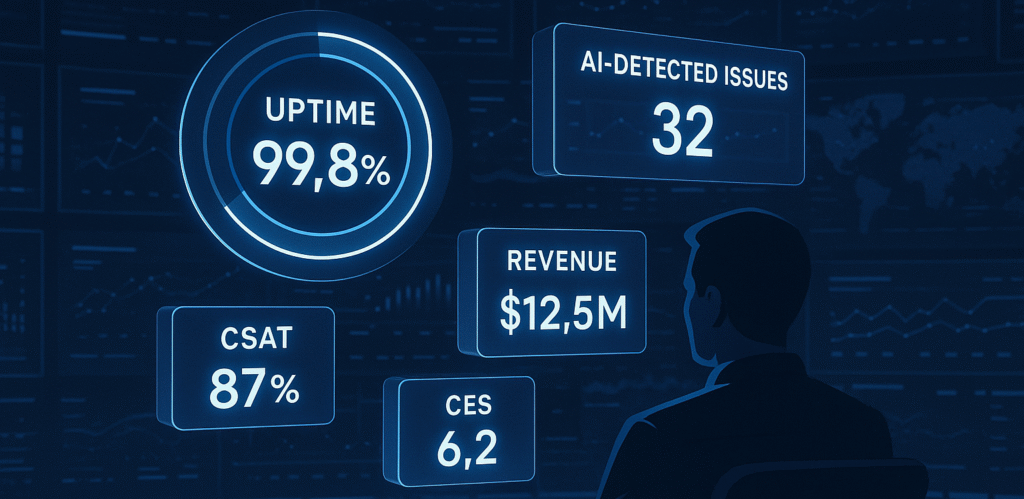
- Service will no longer be measured by “cases closed” or “MTTR.” Instead, success will be tied to measurable customer outcomes such as uptime delivered, energy saved, or emissions avoided.
- Scenario: A HVAC manufacturer guarantees 99.9% cooling efficiency in data centers, with penalties or bonuses linked directly to site metrics.
AI-Native Operations
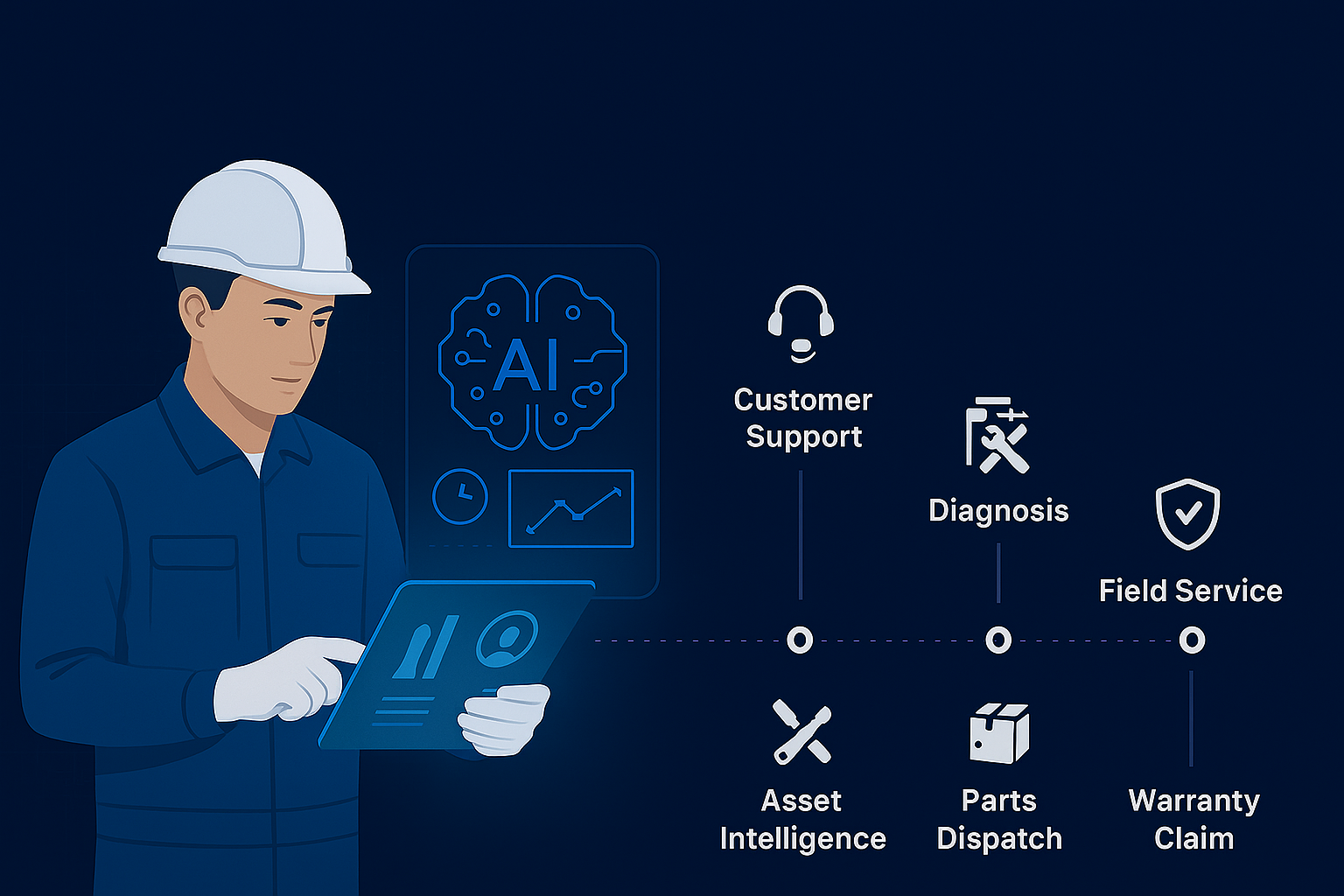
- By 2030, AI won’t be a tool, it will be the operating system of service. From intelligent dispatch to real-time diagnosis and self-optimizing supply chains, AI will orchestrate decisions faster than human teams ever could.
- Consequence: Human roles shift from tactical problem-solving to strategic oversight, customer engagement, and innovation.
Platformized & Ecosystem-Driven
- Service will be delivered through open, platform-based models that integrate OEMs, partners, and even competitors. APIs, shared data, and cross-industry standards will create fluid ecosystems.
- Scenario: A renewable energy provider integrates OEM service data, local contractors, and sustainability metrics into a single platform, giving customers a one-stop view of their entire energy ecosystem.
Sustainability Embedded as Strategy
- The service organization of 2030 will double as the circular engine of the business, designing for repairability, recovery, and reuse.
- Consequence: Service leaders will sit at the board table not just as revenue owners, but as guardians of corporate sustainability goals.
A Reimagined Workforce Model
- Humans, AI, and robotics will co-exist in blended workflows. Technicians will become “solution architects” supported by AR guidance, autonomous inspection drones, and predictive analytics.
- Scenario: A field engineer arrives on site already briefed by AI on the likely issue, assisted by AR overlays and a drone that has pre-scanned the asset. The repair is completed in half the time, with zero repeat visits.
Strategic Pillars for 2030 Success
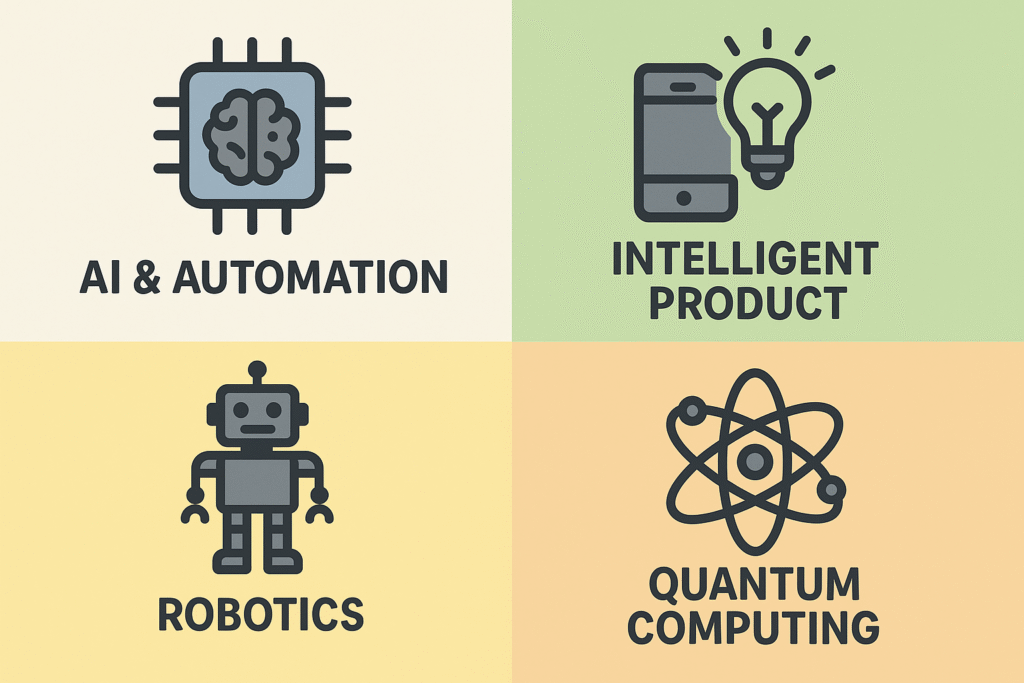
Winning in 2030 requires deliberate focus on four interconnected pillars:
What leaders Must Do Today
Reaching the 2030 vision requires a future-back approach – starting with the desired state of the service organization and working backward to define today’s priorities. But strategy without execution falls short. Leaders must translate ambition into a clear, staged journey as depicted below.
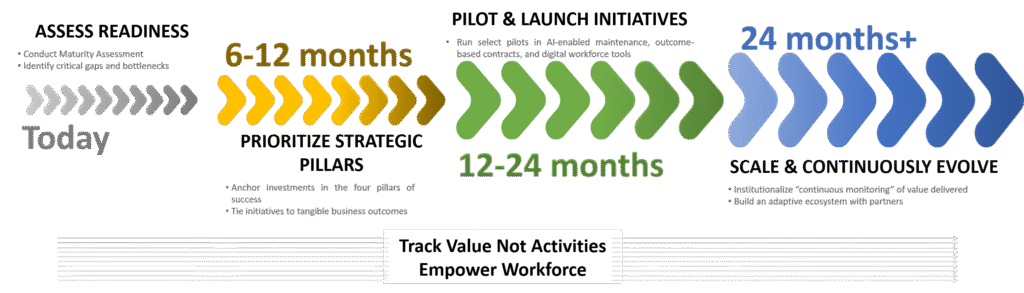
This roadmap is not a rigid plan but a dynamic guide. By balancing long-term vision with staged execution – and by continuously tracking value, empowering the workforce, and staying agile – service leaders can turn the 2030 vision into a reality that drives growth, resilience, and sustainability.
Conclusion: Service as the Differentiator of the 2030s
By 2030, service will be the ultimate differentiator – the engine of brand trust, recurring revenue, and sustainability.
The choice for today’s leaders is clear: those who act now will shape the service landscape; those who wait will be forced to compete on price. The future of service is already being written – and 2030 will be the decade it defines business success.