
Insights

Perspectives on Service, Technology, and Execution
This page brings together perspectives on after-sales, field service, digital transformation, and emerging technologies, drawn from real-world work with manufacturing and automotive organizations. The insights here explore what’s changing, what’s working, and where execution often breaks down, with links to deeper topic hubs for focused exploration.
Explore Insights by Topics





Latest Insights

KPI of the Month #5: Service Gross Margin
Service Gross Margin measures the profitability of your after-sales business after direct service delivery costs are accounted for. For manufacturing and automotive leaders, this KPI determines whether service growth translates into sustainable margin, financial resilience, and long-term enterprise value.
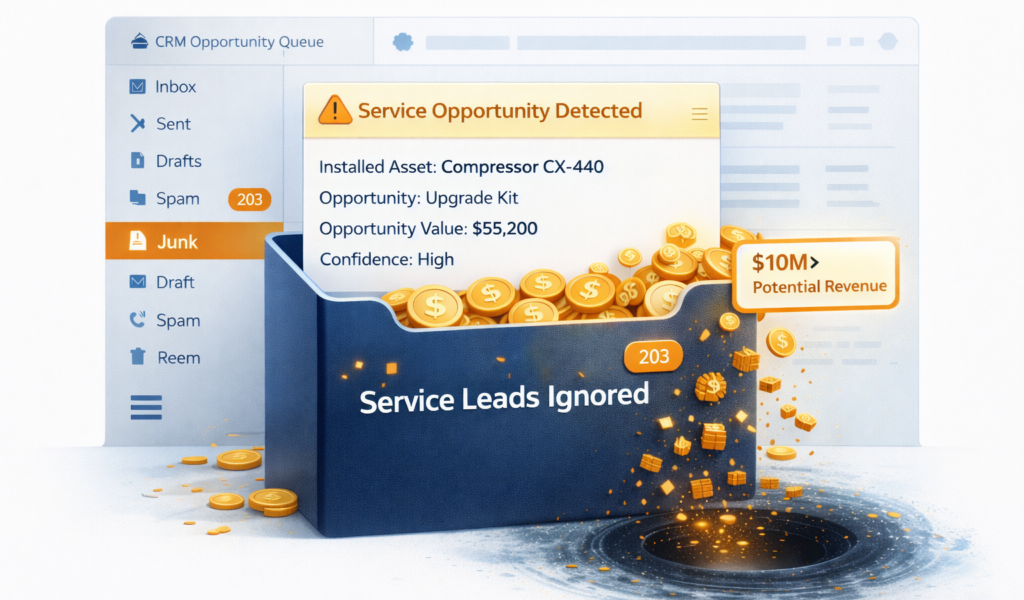
The $10M Junk Folder: Why Installed Base Revenue is Lost
Installed base revenue often goes unrealized even when analytics uncover valuable service opportunities. In many organizations, these leads disappear inside CRM pipelines as sales teams prioritize larger deals. This article explores why service-generated opportunities get ignored, and how manufacturers can redesign the service-to-sales handoff to capture millions in lifecycle revenue.

IT-OT Integration in Aftersales: Turning Machine Data into Service Revenue
Manufacturers invest heavily in ERP systems and industrial IoT, yet many still operate with a critical blind spot: enterprise systems disconnected from machine reality. This article explores how IT-OT integration in aftersales operations unlocks service revenue, improves field service efficiency, and enables outcome-based service models.

When the Dashboard Becomes the Project
Executive dashboards promise clarity, but poorly sequenced rollouts can shift teams from execution to optics. When red-green status indicators become visible to leadership before workflow discipline stabilizes, teams optimize for the dashboard instead of the work. This article explores how transformation leaders can design dashboard rollouts that improve governance without creating delivery friction.

Service Revenue Execution: Why the Levers Matter More Than the Strategy
Service revenue growth in manufacturing doesn’t fail because of weak strategy, it stalls due to execution gaps. This article explains how aligning ownership, incentives, and revenue levers such as contracts, parts pricing, and warranty governance determines whether installed base potential becomes measurable, scalable growth.
KPI of the Month #4: Installed Base Coverage Rate (IBCR)
Installed Base Coverage Rate (IBCR) measures the percentage of assets under active service contract or monitoring within your installed base. For manufacturing and automotive after-sales leaders, IBCR is a strategic KPI that drives recurring service revenue, enables proactive service, and strengthens long-term lifecycle monetization.

Business Case for Agentic AI in Aftersales: Quantifying Incremental Value Beyond Copilots
Most AI investments in aftersales improved productivity but failed to deliver material ROI. This article explains how Agentic AI changes the equation by orchestrating decisions across warranty, parts, dealers, and enterprise systems, unlocking incremental value beyond copilots in aftersales operations.
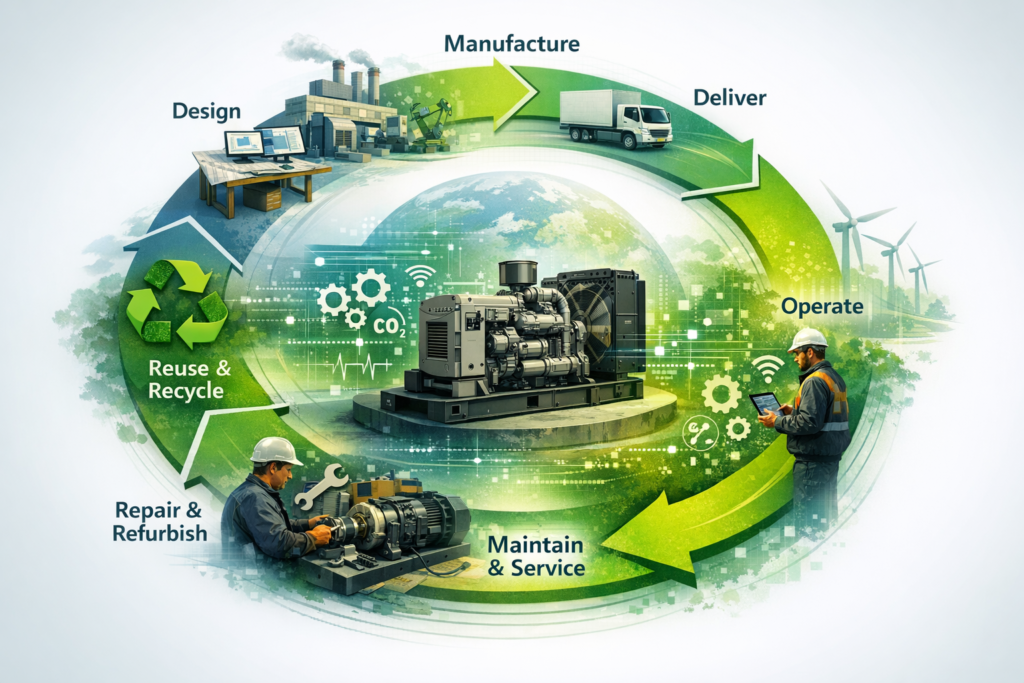
Sustainability & Aftersales: Why Lifecycle Thinking Is Manufacturing’s Real Climate Lever
Sustainability in manufacturing is decided long after the product leaves the factory. This article explores why aftersales and service execution, and not production alone, determine lifecycle impact, Scope 3 emissions, and customer value. By extending asset life through repair-first strategies, organizations unlock sustainability, margin growth, and stronger customer experience at the same time.
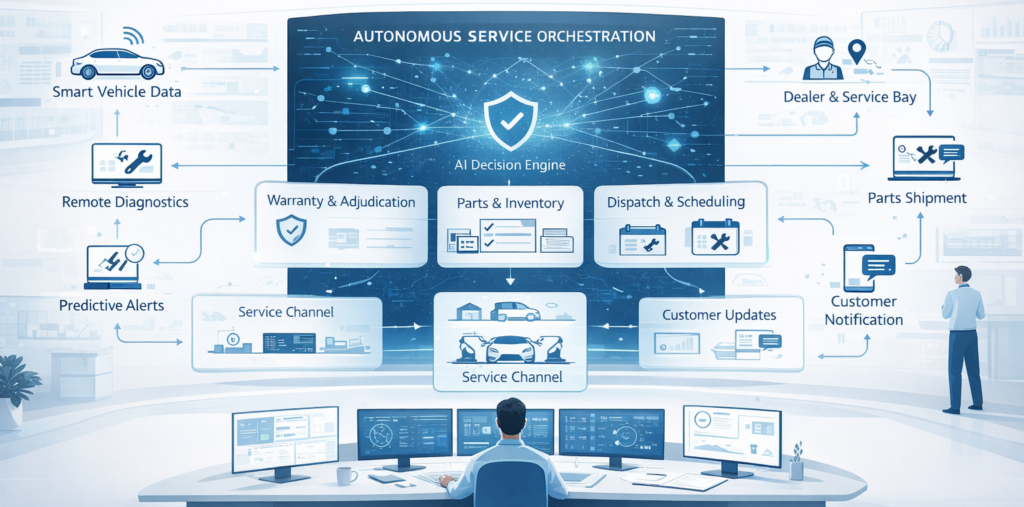
The Fully Autonomous Service Organization: What AI-Led Aftersales Really Looks Like
Aftersales is entering a new phase, one where service decisions are made before customers notice problems. This article explores what a fully autonomous service organization could look like, how AI-led orchestration changes warranty, parts, and dispatch, and why the shift is as much about operating models as technology.