When a service leader spots a technician gap on the roster, the response is almost reflexive: open a requisition, raise the offer, wait. It feels like action. But in 2026, it is closer to wishful thinking.
According to a 2026 manufacturing outlook study, 79% of manufacturing executives now identify skilled labor shortage as their single biggest operational challenge, up nine points from 2025. And the trajectory isn’t improving. Industry projections suggest the US manufacturing sector will need 3.8 million new workers by 2033, with nearly half those roles at risk of going unfilled even under optimistic hiring scenarios.
No recruitment strategy closes a gap that large.
The real question, the one most service organization are not asking yet, is this: what does your service delivery model look like when expert technicians are genuinely and permanently scarce? That is a design problem, not a hiring problem. And it demands a response across four time horizons: optimizing what you have today, redesigning your products for the medium term, building autonomous fault resolution into your machines, and rethinking how service labor is sourced entirely.
Nearly 50% of the 3.8 million manufacturing roles needed by 2033 are at risk of going unfilled, even under current hiring projections.
The Real Risk Is Knowledge Concentration, Not Headcount
Before designing solutions, service leaders need to name the problem precisely. The technician shortage is not just a headcount issue. It is a knowledge concentration risk, your service delivery quality is disproportionately held by a small number of senior people whose expertise is undocumented, non-transferable, and walking toward retirement.
Nearly 74 million Baby Boomers are transitioning out of the workforce, and the generations replacing them are expected to perform the same jobs at the same productivity levels, without the same accumulated knowledge. Seventy percent of service organizations already anticipate significant operational burden from this knowledge loss over the next decade. More troubling: when that institutional knowledge exits, it doesn’t just slow down service operations. It undermines AI adoption too, because there is nothing structured left to train on.
The audit question every service VP should be asking right now: if your three most experienced field engineers left this quarter, which failure modes would become unsolvable? That brittle point is where your strategy needs to start.
Solving it requires responses across multiple time horizons simultaneously, and that distinction matters. Some fixes can be deployed this quarter; others require changes to how your products are designed or how your machines behave autonomously.
The temptation is to focus only on what’s immediately actionable. The risk is that short-term fixes without structural reform just delay the reckoning. What follows is a four-horizon framework: what you can do now to extend the capacity you already have, how product design can reduce the skill requirement embedded in every service event, how machines can begin resolving their own faults, and how the labor market for field service may be restructured entirely.
Short-Term: Extend and Optimize the Capacity You Already Have
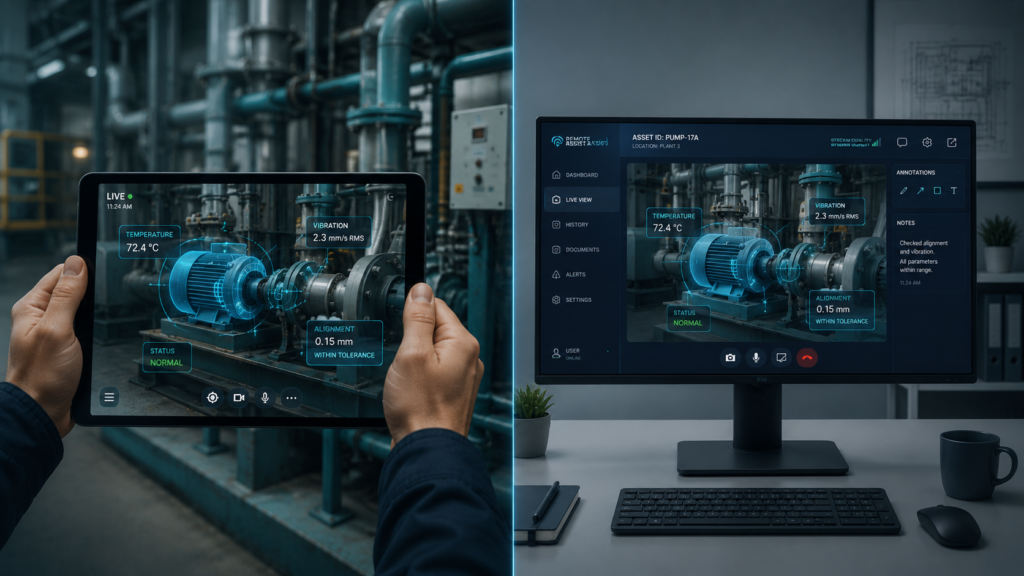
These six levers won’t solve the structural problem. But they reduce the bleeding while medium and long-term fixes take hold, and several of them are being dramatically underutilized.
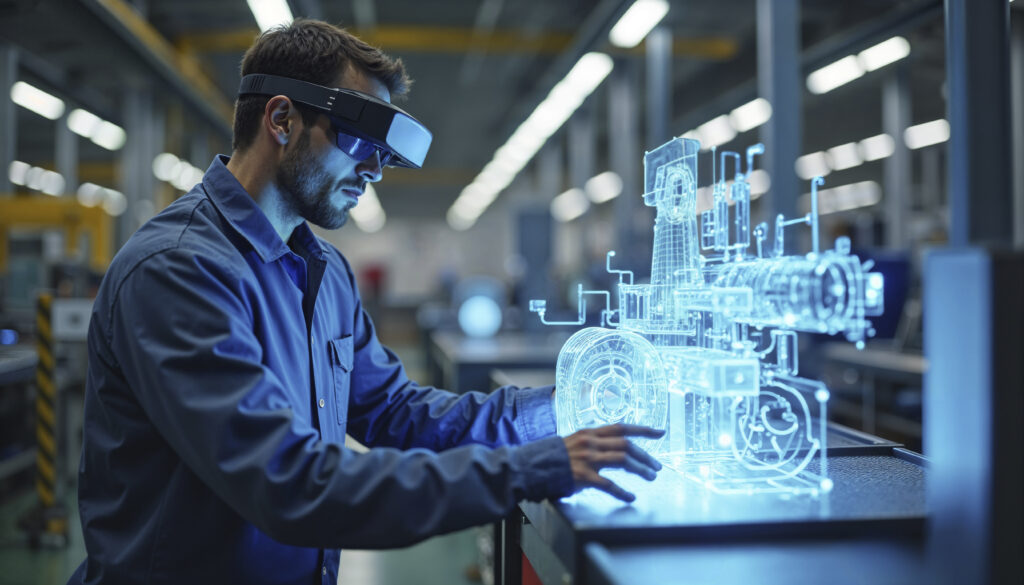
- Remote Assistance and Immersive AR: Augmented reality has moved well past pilot stage. Platforms like PTC Vuforia and SightCall now allow a senior expert to serve as remote eyes-and-voice for a junior technician in the field, annotating what they see in real time, walking through diagnosis step by step. The leverage effect is significant: one expert can support multiple simultaneous field jobs instead of one. First-time fix rates improve. Truck rolls decrease. The technician who shows up doesn’t need to carry ten years of product knowledge, they need to carry a device and a clear line to someone who does.
- Knowledge Capture Before It Walks Out: The time to capture expert knowledge is before the expert leaves, not after. AI tools can now extract repair patterns, failure signatures, and diagnostic heuristics from years of historical work orders, turning unstructured technician notes into searchable institutional memory. Facilities that have deployed structured AI knowledge capture report training times for new technicians falling by 60%. That’s not a marginal gain; that’s compressing years of apprenticeship into months.
- Tiered Workforce Model Not every field job requires the same skill level. Redeploying senior technicians from field dispatch to remote expert coaching roles, while lower-cost locally available technicians handle physical presence, is an organizational design decision as much as a technology one. It preserves your most valuable cognitive capacity for where it is actually needed.
- Cross-Skilling and Utilization Optimization: Here is a number that should reframe the conversation: according to TSIA benchmark data, best-in-class field service organizations achieve 75–85% technician utilization, yet most manufacturers operate well below that range, losing meaningful capacity to scheduling inefficiencies, poor parts availability, and administrative overhead before the shortage even enters the picture. Closing that gap is a capacity recovery opportunity that requires no new hires. Cross-training technicians on adjacent skill sets compounds this further. Moving from one to two certified skills per technician reduces travel time and recovers hours of productive capacity per technician annually. Most OEMs have not fully utilized the workforce they already employ.
- AI-Assisted Scheduling and Dispatch: Algorithmic dispatch, matching the right technician to the right job based on skill, proximity, parts availability, and real-time traffic, is a force multiplier on existing headcount. Intelligent field service scheduling and dispatch have improved technician response times by 20% without adding a single hire.
- Workforce Pipeline Partnerships: OEMs including GM, Ford, and Stellantis have begun co-funding technician training programs with community colleges, where students receive direct OEM-certified instruction before entering the workforce. It is the right move, but it takes two to three years to yield results and does nothing for the skills gap inside your current team. Build the pipeline, but do not wait for it.
| Lever | Time to Impact | Investment Level | Best For |
|---|---|---|---|
| AR Remote Assistance | Immediate | Medium | First-time fix rate, senior leverage |
| AI Knowledge Capture | 3–6 months | Medium | Retirement risk, onboarding speed |
| Tiered Workforce Model | 3–6 months | Low | Org design, cost optimization |
| Cross-Skilling | 6–12 months | Low–Medium | Utilization, scheduling flexibility |
| AI Scheduling & Dispatch | Immediate | Medium | Throughput, response time |
| College/Trade Partnerships | 2–3 years | High | Long-term pipeline |
Medium-Term: Redesign the Machine, Not Just the Workforce
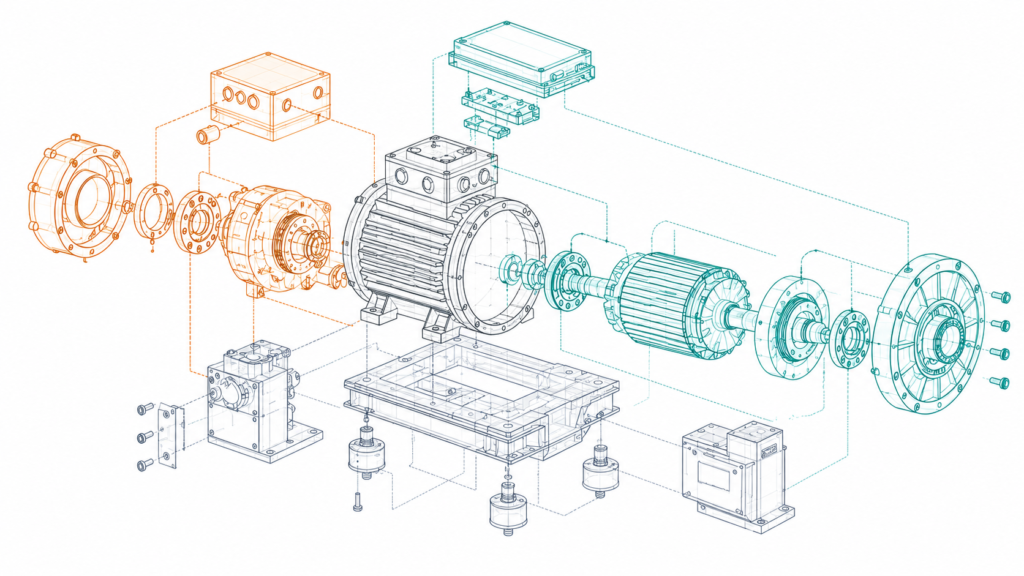
If the six levers above represent mitigation, this is where transformation begins. The technician shortage is partly an engineering problem, and the fix belongs in the product design stage, not the service ops manual.
Most industrial equipment today was designed as if expert technicians would always be available to service it. Complex assemblies, proprietary fasteners, deep diagnostic dependencies, these design choices embed a skill requirement into every service event. Design for Serviceability (DFS) challenges that assumption at the source.
The core idea: engineer products so that maintenance and repair can be performed quickly, safely, and consistently by technicians with appropriate, not exceptional, training. This means four specific design disciplines working together:
Modular Components and Quick-Change Architecture: Fault isolation becomes dramatically simpler when a machine is built in discrete, replaceable modules. Instead of diagnosing a complex assembly, a technician identifies the faulty module and swaps it. Repair time drops from hours to minutes. The skill requirement shifts from deep diagnostic expertise to basic mechanical competency. Automotive EV manufacturers are already applying this logic to battery pack design by embedding module-level voltage and thermal sensors that isolate the fault to a specific cell cluster before the technician arrives, eliminating diagnostic ambiguity entirely.
Embedded Diagnostics: Serviceability doesn’t begin when the technician arrives. It begins when the machine detects its own fault and communicates it precisely. Equipment that reports not just that something is wrong, but what is wrong, where, and which replacement part is needed, compresses the most knowledge-intensive part of a service event i.e. diagnosis into something a junior technician can execute.
Standardized Interfaces Across Product Lines: Proprietary variation is a hidden multiplier of skill requirements. When every product generation requires different tools, different diagnostic connections, and different certification pathways, you are creating an artificial scarcity of qualified technicians. Standardizing service interfaces across a product portfolio means a technician certified on one platform can operate across many.
Backwards Compatibility Into the Installed Base: New serviceability improvements are only valuable if they extend to the equipment already in the field. Designing for backwards compatibility. Ensuring new modules and diagnostic tools work on older installations protects the installed base and reduces the long tail of legacy expertise dependencies. Organizations that lack visibility into their installed base often struggle to scale these improvements consistently, making installed base management a critical capability for long-term service performance.
Every hour of technician skill requirement you engineer out of a product is an hour you don’t need to hire for. Serviceability is a workforce strategy disguised as an engineering decision.
The organizational implication is significant: service leaders need a formal seat at the product design table. Field MTTR data, failure mode frequency, and technician time-on-task by task type should flow directly into engineering design reviews. Mean Time to Repair (MTTR) should be a design KPI, tracked from the earliest prototype stage, not an aftersales metric applied retrospectively once the product is in market.
Long-Term: Equipment That Reduces Its Own Need for Service
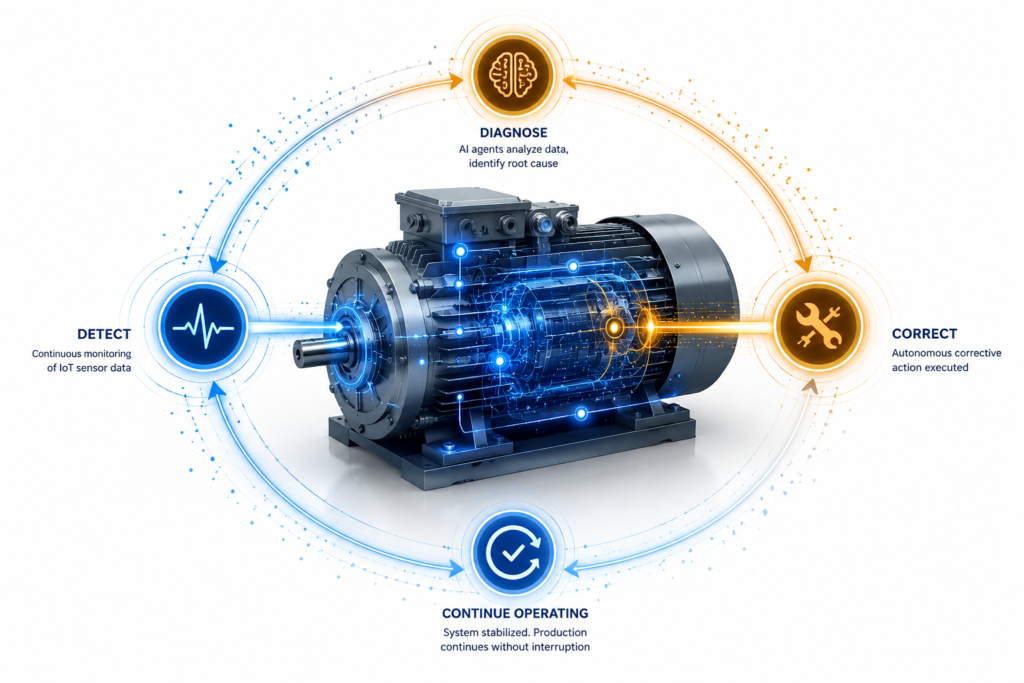
Predictive maintenance tells you a failure is coming. Self-healing goes further: it corrects the fault before a technician is ever dispatched.
The underlying technology, AI agents monitoring IoT sensor data in real time, diagnosing root causes, and executing autonomous corrective actions, has moved from research to real deployment. Recent published studies report 97% fault detection accuracy and 89% self-healing recovery rates, with mean-time-to-repair reduced by nearly a third. In agentic AI deployments in manufacturing environments, fault response times have been shown to drop from tens of minutes to seconds, with process recovery becoming nearly instantaneous.
A concrete example makes this tangible: an autonomous welding cell detects a weld defect during production, identifies tip wear as the root cause through pattern analysis, triggers an on-the-fly tool change, and executes a re-weld, all without human involvement, all within a single production cycle.
Self-healing systems typically operate across three escalating layers:
- Parameter auto-correction: The machine detects drift in operating conditions such as temperature, pressure, vibration, and recalibrates automatically within safe thresholds, preventing the fault from developing further
- Safe mode activation: When a fault exceeds auto-correction range, the system degrades gracefully by reducing load, isolating the affected subsystem, maintaining partial operation, thus buying time before human intervention without triggering full shutdown
- Redundancy switching: Automatic failover to backup components or parallel systems when a primary component fails, maintaining uptime while flagging the failure for scheduled maintenance
Self-healing AI systems in manufacturing have demonstrated 97% fault detection accuracy and an 89% autonomous recovery rate, reducing mean time to repair by 31%.
For OEM service leaders, the strategic implication runs deeper than operational efficiency. As self-healing capability grows across the installed base, the service contract itself needs to be redesigned. Time-and-material models and scheduled preventive maintenance visits become difficult to justify when the machine handles routine fault correction autonomously. The shift is toward outcome-based contracts, where the OEM guarantees uptime percentage, not visit frequency, and toward remote monitoring as the primary service delivery channel.
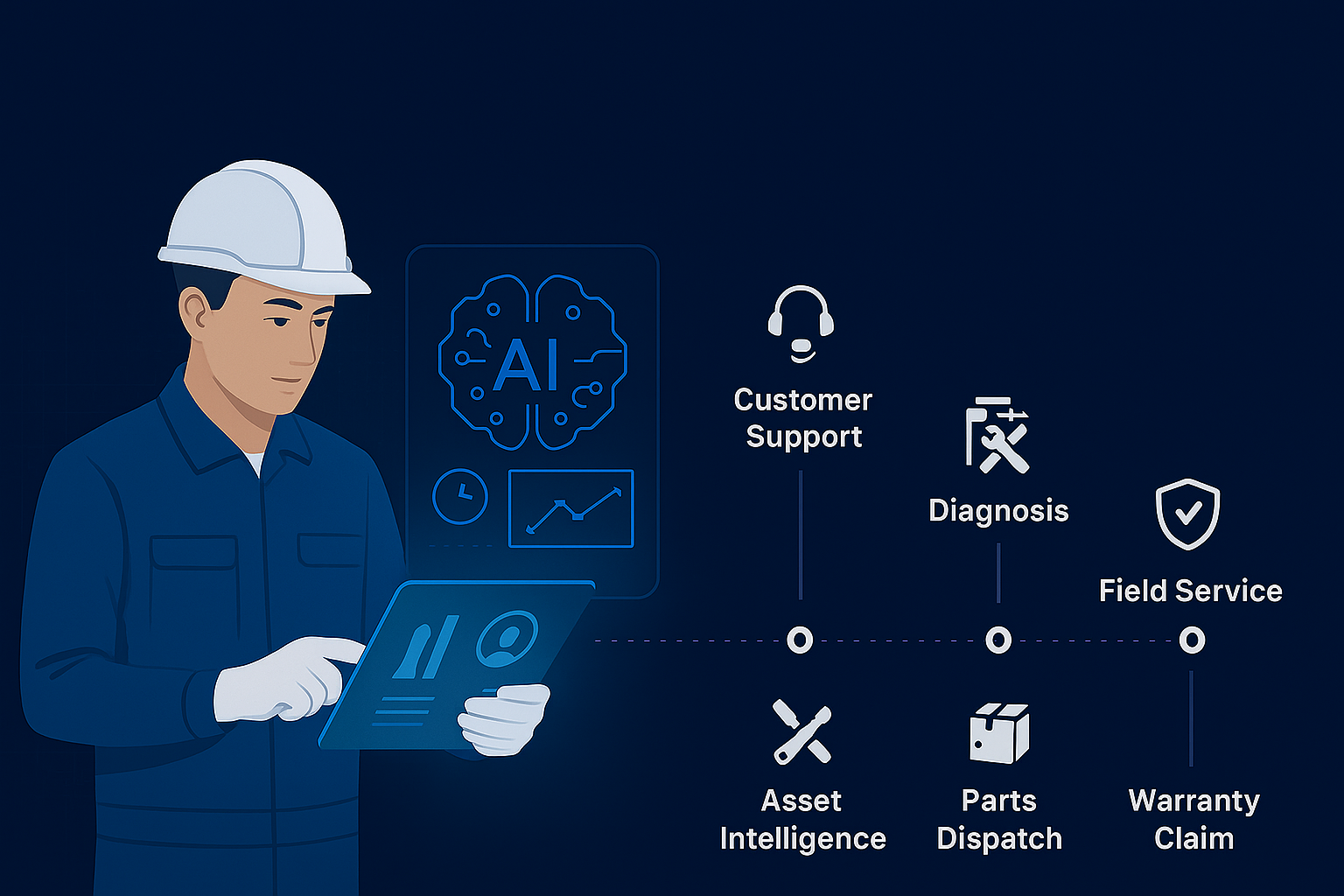
This does not eliminate the need for technicians. It changes what technicians are for. Self-healing filters the routine and recoverable faults autonomously, preserving scarce human expertise for the genuinely complex failures that require physical intervention, advanced diagnostics, or judgment under uncertainty. The growing role of AI in service and warranty operations is increasingly shifting technician effort away from routine troubleshooting and toward higher-value problem solving.
Future Horizon: The On-Demand Technician Network
The final structural shift is in how service labor itself is sourced and deployed.
The Uber analogy has circulated in field service conversations for years, usually dismissed as too simplistic. The dismissal is fair on the surface: field service work is not commoditized the way a ride is. An OEM-certified service event on a complex industrial machine is not interchangeable. The technician cannot simply be whoever is nearest and available.
But the underlying model of dispatch based on verified skill match, proximity, availability, and track record, without requiring full-time employment is already operating in adjacent sectors. Platforms like Field Nation deploy tens of thousands of independent skilled contractors for IT field service across North America. The manufacturing aftersales equivalent is nascent, but directionally clear.

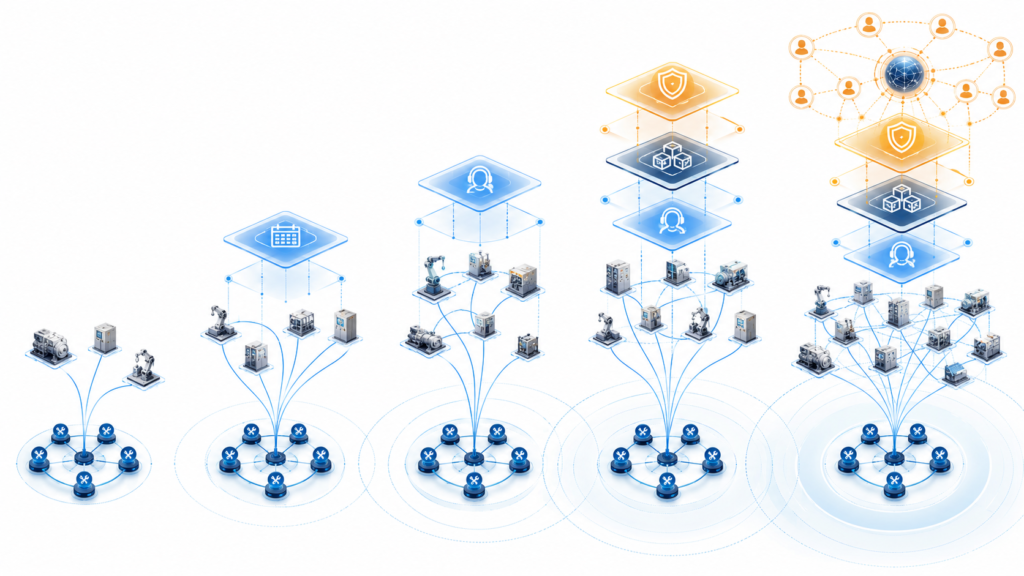
What makes it viable for industrial OEM service is the combination of the previous three horizons working together:
- Simpler equipment (Section 3) lowers the skill floor for physical execution tasks, expanding the pool of contractors who can perform them
- Self-healing systems (Section 4) narrow the range of events that require human physical intervention, concentrating gig deployment on well-defined, executable tasks
- AR remote assist (Section 2) means a contractor in the field can be guided in real time by an OEM expert remotely, extending certified knowledge to a broader labor pool
The emerging model is a hybrid architecture: OEM-employed senior experts handle complex diagnostics, remote guidance, and relationship-critical interventions. A certified on-demand contractor network handles physical execution of standardized, well-scoped tasks such as scheduled maintenance, module swaps, installation checks.
There is a commercial dimension here too. OEMs with large certified contractor networks are not just solving their own service capacity problem, they are building a platform asset. The OEM that controls the certification standard, the dispatch platform, and the quality rating system for industrial field service in their category holds a structural advantage that compounds over time.
A Roadmap for Service Leaders
The four horizons are not sequential choices. They are a simultaneous portfolio, each one enabling the next, each one compounding the value of the others. Organizations that act on Section 2 immediately while designing toward Sections 3 and 4 will arrive at Section 5 with a genuinely differentiated service delivery model.
Those that treat the technician shortage as a temporary hiring problem will still be posting requisitions when their competitors have already redesigned around scarcity.
| Horizon | Response | Investment | Strategic Outcome |
|---|---|---|---|
| Now | AR remote assist, knowledge capture, cross-skilling, AI scheduling, pipeline partnerships | Low–Medium | Extend and optimize existing capacity |
| 1–3 Years | Design for serviceability feedback loops, modular architecture, standardized interfaces | Medium–High | Reduce skill requirement embedded in every service event |
| 3–5 Years | Self-healing equipment, autonomous fault correction, outcome-based contracts | High | Reduce frequency and complexity of human intervention |
| Future | On-demand certified technician networks, OEM dispatch platform | High | Replace fixed capacity with scalable, flexible access |
The organizations that win the next decade of aftersales will not be the ones that hired the most technicians. They will be the ones that made expert technicians less necessary, and the ones that remained indispensable to customers in every moment that still required human judgment.
Not sure where your service organization sits on this curve? Start with our AI Readiness Assessment, it maps your current capabilities against the digital and operational levers that determine service resilience.
Have a view on where your service organization sits on this curve?
Share your experience via the contact form. Practitioner inputs shape the content on this site.